Բաժանորդագրվեք araratnews-ի տելեգրամ ալիքին։
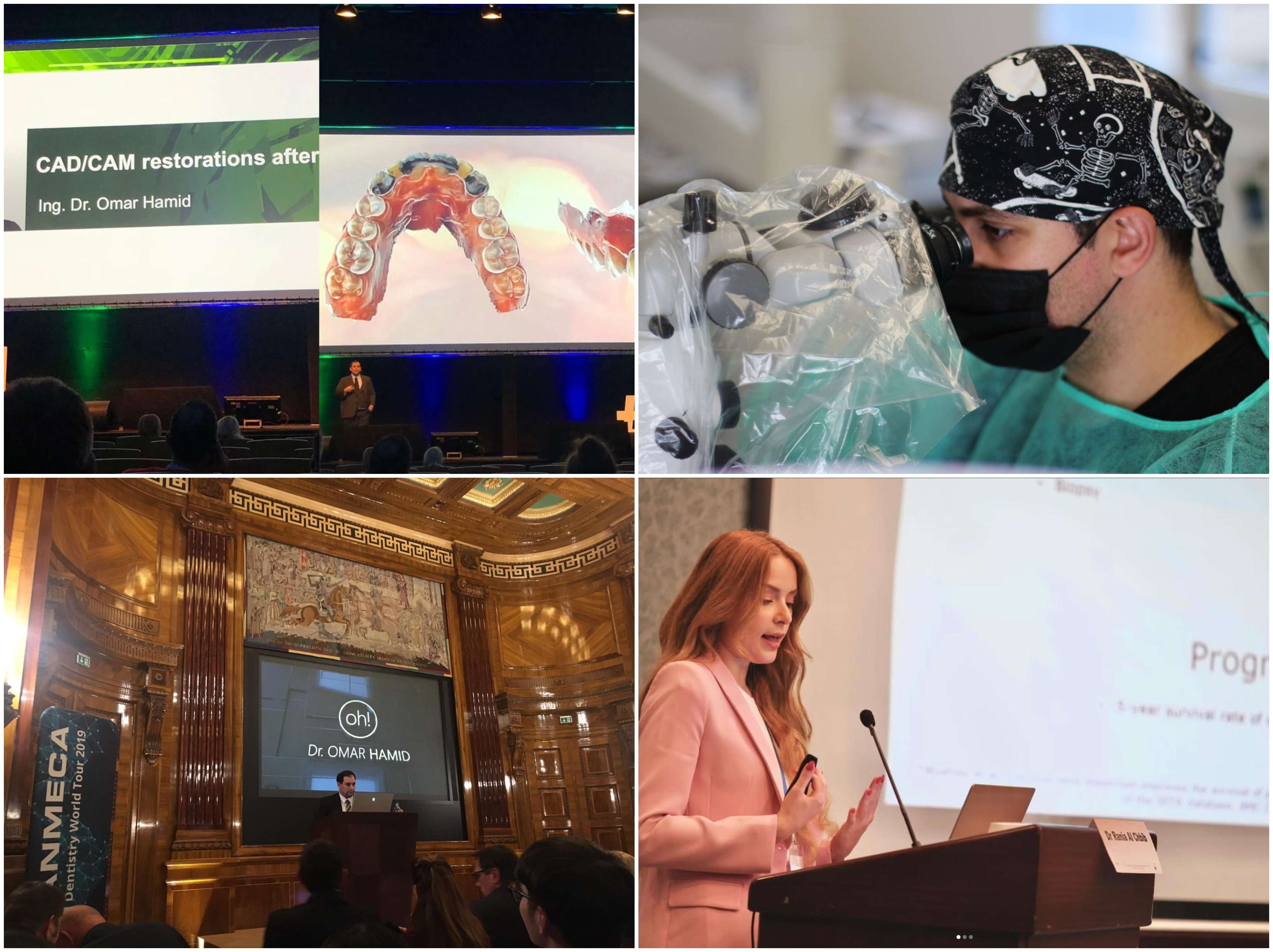
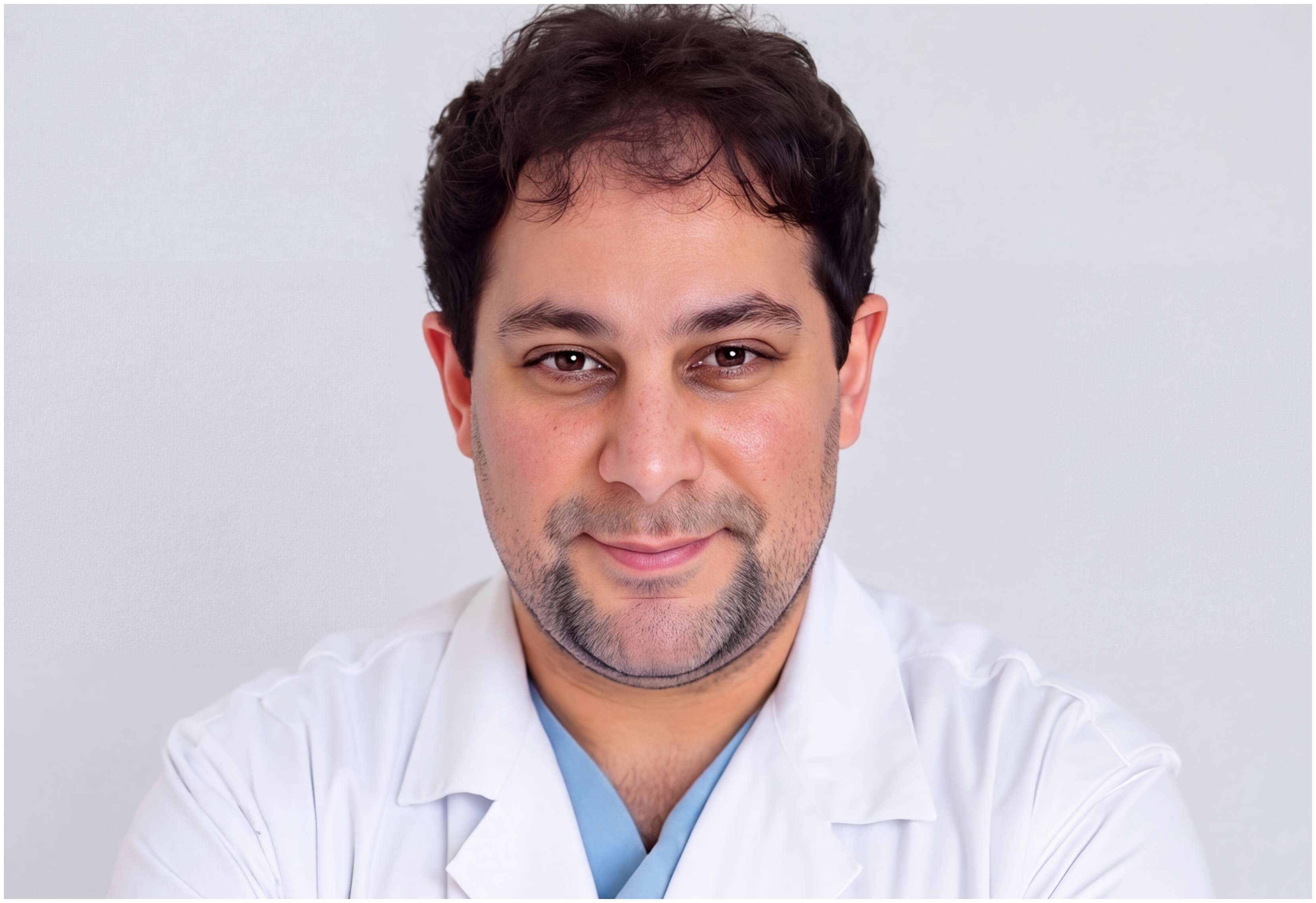
In an exclusive interview with AraratNews, Dr. Omar Hamid, DMD, Eng, MSc — an expert in aesthetic, regenerative and reconstructive dentistry — spoke about his unique journey from 3D engineering to dentistry, the future of AI, digital technologies, and his upcoming visit to Armenia.
Based in Vienna, Dr. Hamid combines engineering, three-dimensional technology and medicine in an approach he calls “Smile Engineering.”
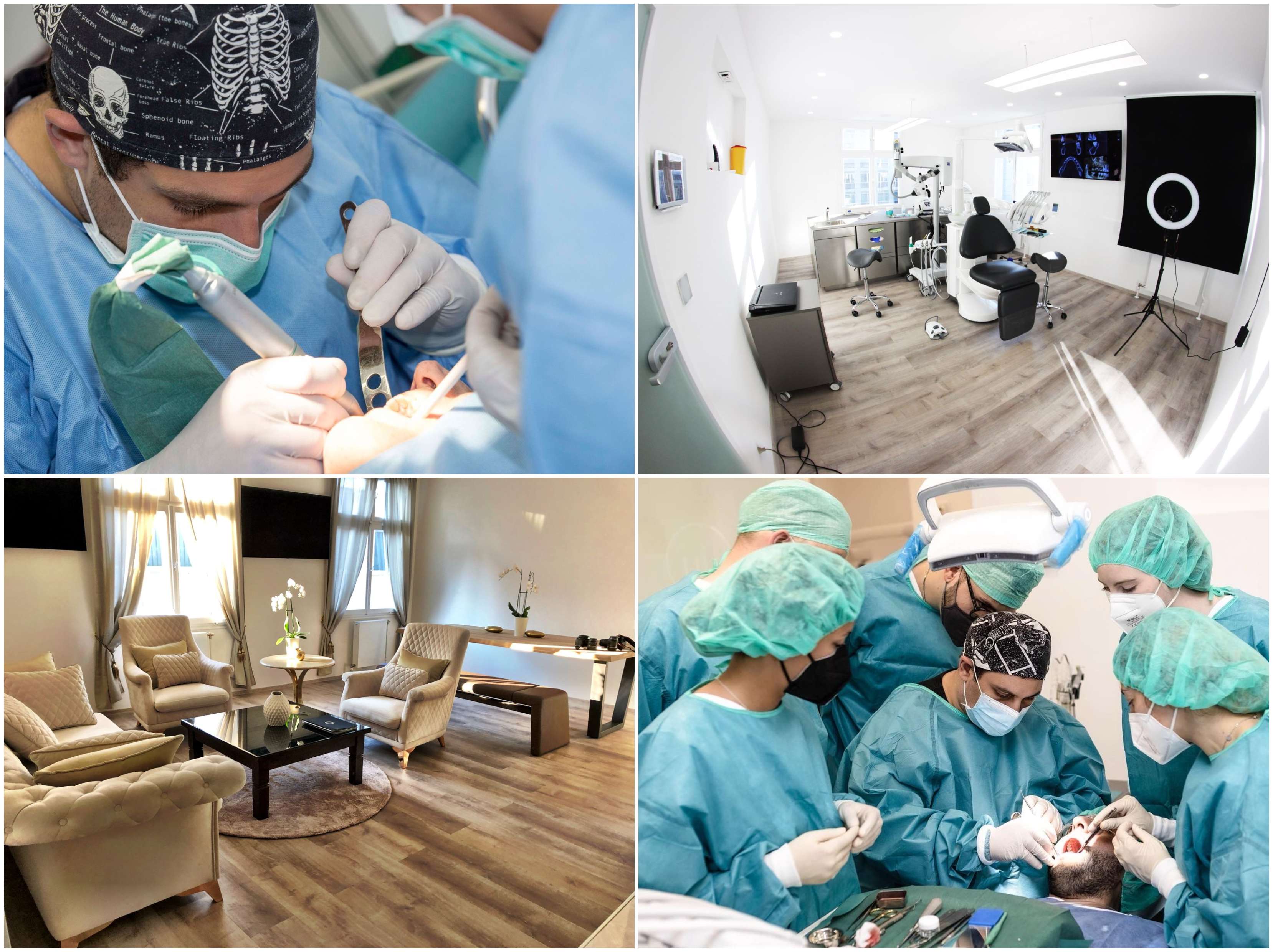
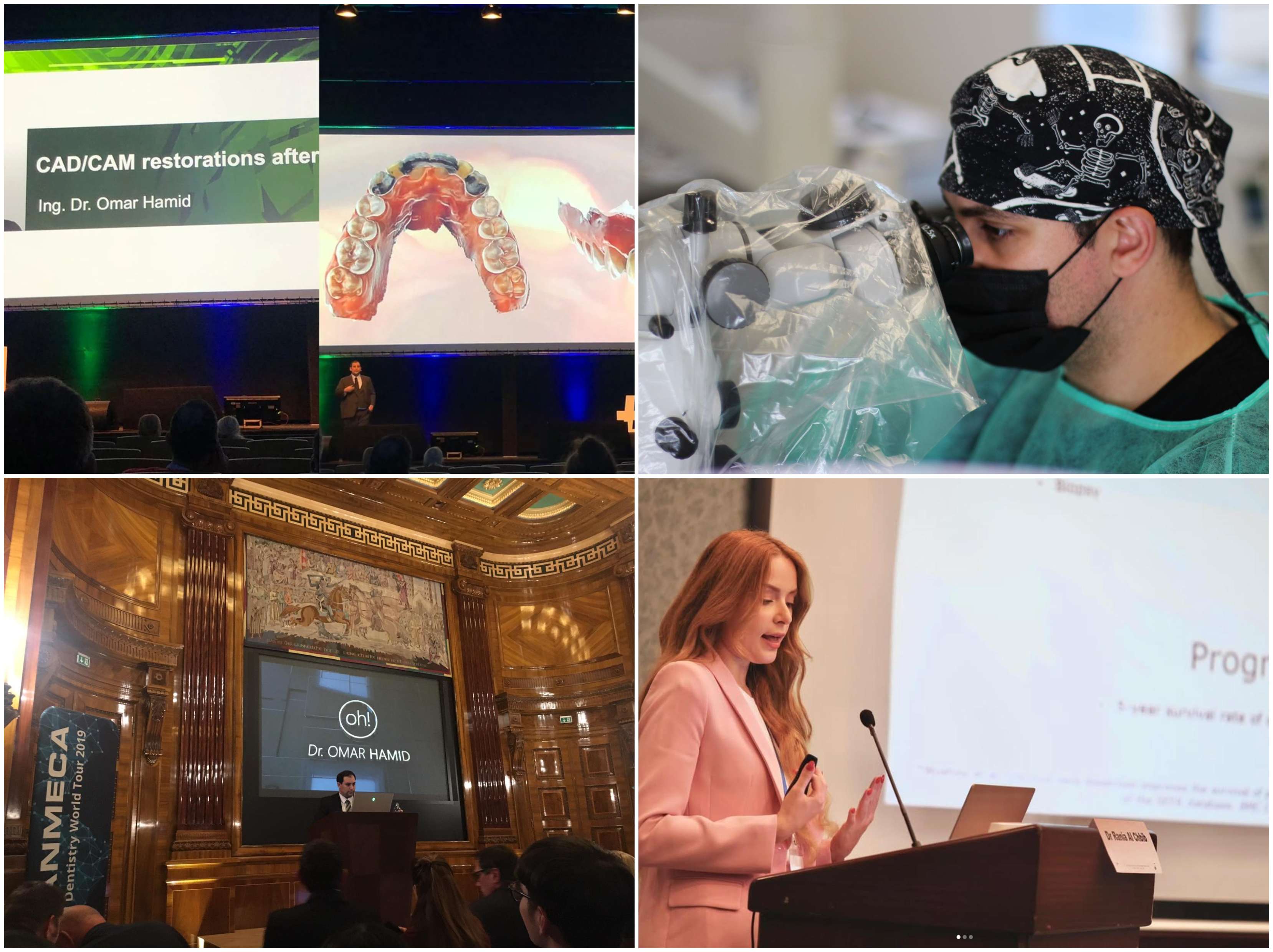
Together with his wife, Dr. Rania Al Chbib, he runs two clinics in Vienna and works with a partner clinic in Dubai.
For AraratNews, Dr. Hamid shared his vision of modern dentistry — where technology, precision and preservation come together.
From engineering to dentistry
Your professional journey began in engineering and 3D programming, before you entered dentistry. How did that transition happen?
My first training was as an engineer in data processing at the Higher Technical College for Engineering, where I specialised in 3D programming. Afterwards, I studied dental medicine at the Medical University of Vienna, with international residencies at UCLA in Los Angeles, the Karolinska Institute in Stockholm and the University of Barcelona.
Later, I completed a Master of Science in Aesthetic Medicine at Queen Mary University of London, and I am currently completing my habilitation at Sigmund Freud Private University in Vienna.
At the time, the engineering degree looked like a detour. Then dentistry went digital, and quite suddenly CAD/CAM and 3D printing became the environment I had grown up in. It felt less like learning a new subject than coming home to one.
Ivoclar Vivadent and Planmeca noticed my work fairly early and appointed me as a Key Opinion Leader.
Since then, I have spent my career trying to keep two things in the same room: the engineer who thinks in data and geometry, and the surgeon who works with living tissue that does not always agree with the plan.
 What is “Smile Engineering”?
You combine engineering, 3D technology and aesthetic medicine in your approach to dentistry. How have these fields influenced the way you work?
I could only connect the dots looking backwards. When I was studying 3D programming, nobody suggested it would one day count as a dental qualification.
Engineering taught me to think in coordinates and tolerances, to ask how accurate something actually is rather than how good it looks. Aesthetic medicine taught me to work in the other direction — starting from the face and moving inwards, instead of starting from a tooth and hoping the face will agree with it.
Together, they produced a particular habit: we plan the face first, then the smile, then the individual teeth. Afterwards, we can measure in three dimensions whether what we planned is what we achieved.
Three-dimensional measurement is also what my habilitation is about.
Put simply, I approach the smile from an engineering point of view. I call it Smile Engineering, and I mean the word seriously rather than decoratively.
Teeth are geometry: proportion, axis, angle, curvature, symmetry, and the small deliberate asymmetries that keep a face looking human rather than manufactured.
Geometry is mathematics, and anything mathematical can be specified precisely, built to a tolerance and verified afterwards. Dentistry simply took a long time to notice that its central object was a mathematical one.
In practice, it comes down to four habits: define the target precisely instead of describing it in adjectives; build to a tolerance rather than to an impression; verify the finished result against the specification you started with; and never remove more material than the design actually requires.
The last of those is ignored more often than the other three.
A good engineer does not demolish a sound structure because a new facade would be easier to fit.
Precision is not the opposite of beauty. It is what makes beauty repeatable.
That is also how I answer patients who come in asking for a perfect smile. In engineering, “perfect” is not a look. It means agreement with the specification, and the specification is taken from that patient's own facial geometry, not from a catalogue or a photograph of somebody else.
So the perfect smile is really just the one that is mathematically correct for that particular face.
That is why no two of ours are alike — and why our patients are not recognisable as ours.
When dentistry becomes preservation
You specialise in aesthetic, regenerative and reconstructive dentistry. What particularly fascinates you about this field?
We have built a reputation for difficult situations, and quite often for cases where treatment has failed.
A wide network of colleagues refers those patients to us, which we are grateful for, and that steady exposure to complexity is how experience actually accumulates.
Soft tissue and hard tissue augmentation — rebuilding what was lost — is a major part of our work.
My dissertation on lip rejuvenation was published in the Journal of Cosmetic Dermatology, and it changed the direction of my curiosity more than I expected at the time. It is where my interest in the healing potential of the patient's own blood began, and that is what I follow most closely on the regenerative side.
On the reconstructive side, everything is moving towards 3D printing. The material properties available today did not exist a few years ago, and a good deal of what once took weeks can now be finished in a single day.
Why Vienna?
Your patients could be treated almost anywhere in the world. Why do they choose Vienna?
Because of what they are not prepared to risk.
Patients at this level are rarely price-sensitive and almost always risk-sensitive. The question is not what the treatment costs. It is what happens if something goes wrong, who will still be there in five years, whether anyone will take responsibility, and whether they will end up explaining their own mouth to a third dentist in a fourth country.
So what they are really buying is not simply the treatment. It is the assurance that everything possible will be done so that they do not have to go through it again.
In medicine, nobody can promise certainty. What we promise is the effort, the standard and the accountability.
Everything we have built — the diagnostics, the measurement, and the fact that we take on complications that other clinics refer away — exists to make that promise credible rather than decorative.
We treat a patient's smile as an asset placed in our care, and we manage it accordingly: with a long horizon, honest accounting, and the working assumption that we will still be answerable for it twenty years from now.
Many of your patients have very little time. How do you work with that?
By treating time as what it actually is for them: the scarce resource.
Their rarest asset is not money. It is uninterrupted time.
So we compress rather than dilute.
Complete diagnostics in a single morning — imaging, facial scan, joint analysis and photographic status. Planning the same day. Where the case allows it, implant placement with immediate loading and the restoration designed and printed in the same session.
Coming once and doing it properly is not only more convenient. In this field, it is usually the better medicine as well.
What does “luxury” mean in medicine?
Not marble. Marble is easy to buy.
In medicine, luxury is the absence of uncertainty.
No unexplained second opinions. No “let us see when we open it.” No discovering the real plan and the real price somewhere in the middle.
The most luxurious thing we can offer is that the plan we showed a patient in three dimensions on the first day is the thing we measure against on the last one.
The hotel, the chauffeur, the flight handling — all of that is hospitality. We do it well and we enjoy doing it, but it is the wrapping rather than the contents.
The technology behind the smile
How do you use 3D technology in your practice, and what does it change for patients?
A first visit with us is not what most people expect from a dental appointment.
Before we examine anything clinically, we create a complete digital copy of the patient: cone-beam computed tomography, intraoral scans, a facial scan, an analysis of jaw-joint movement and a full photographic status.
Only then do we look in the mouth.
That order matters more than it sounds. It allows us to detect disease early, identify acute or chronic infections that might otherwise remain hidden and, increasingly with the help of AI, anticipate certain problems before they arise.
The advantages are not complicated. We can show patients their own situation instead of simply describing it, which changes the entire conversation.
And afterwards, we can evaluate our own work against real data rather than an impression.
This is the first stage of Smile Engineering, and it rests on something any engineer takes for granted:
You cannot engineer what you have not first measured.
Most of dentistry still begins with an examination and an opinion. We prefer to begin with a specification.
AI: assistant, not replacement
Artificial intelligence is becoming increasingly important in healthcare. How do you currently use AI, and what role do you think it will play in dentistry?
AI is not on its way — it is already in the building.
The strongest applications today are administrative and diagnostic. Software does not get tired, it has not had a long day behind it, and it does not miss the small shadow on the twentieth image.
More creative applications appear every few months, and the next wave — robotics — will push all of this even further.
It is a genuinely interesting time to be working in dentistry.
There is one qualification, though: AI is an excellent second opinion and a poor first one.
It can tell you what it sees. It cannot tell you what this particular patient needs.
That judgement has to remain with the doctor.
Beyond the treatment
What do patients usually tell you after treatment?
Almost never anything about their teeth, which tends to surprise people.
The sentence I hear most often is some version of: “I stopped thinking about it.”
For years, they had been quietly managing something — chewing on one side, choosing a particular angle whenever a photograph was taken, or putting a hand halfway up when they laughed.
They rarely describe it as a problem. It is simply a small piece of daily attention running in the background, sometimes for a decade.
Then it is gone. Not improved — gone from their mind altogether.
And usually, they cannot quite describe how.
That is the real product, if I am honest about it. Not a smile, but the attention they get back without ever having noticed they were spending it.
It is sometimes said that a smile has become a luxury asset. Would you agree?
An asset is something you invest in, something you maintain, and something you can lose. By that definition, yes, entirely.
I would only be careful with the word “perfect”, because perfect is what gets advertised, and what gets advertised has usually been retouched.
Nearly everything in a person's portfolio can be repurchased. A company can be rebuilt. A house, a painting, a car — all are replaceable given the means.
Nobody has ever bought back their own enamel.
It is the one holding our patients own that is permanently finite, and most of them have never once thought about it in those terms.
That is the whole argument for preservation over replacement, and it is why I am so uncompromising about irreversible cosmetic treatment.
Grinding down healthy teeth to fit a more fashionable surface is not investing in an asset. It is spending the principal.
The sensible approach is the same as with any real asset: know exactly what you hold. Maintain it early, because maintenance is always cheaper than reconstruction. Replace only what genuinely cannot be saved, and when something does have to be rebuilt, rebuild it well enough that it does not become a recurring cost.
There is also a return, as there is with any asset worth holding.
Our patients spend their working lives in rooms where they are being assessed — negotiations, boards, first meetings that decide everything that follows.
What they describe to me afterwards is not that they look better. It is that they are no longer managing something while they speak.
The half-second of hesitation before laughing, the hand that moves, the sentence cut short in order to close the mouth sooner — all of it costs attention.
And attention is the one thing you cannot spare in a difficult negotiation.
So the return on this particular asset is not really cosmetic.
It shows up as confidence, and confidence is expensive to fake.
A smile does not have to be perfect.
It has to be yours, it has to be sound, and it should outlast you.
Armenia: a country of preservation
What is your perception of Armenia and the Armenian people? Have you had any personal or professional connections with Armenia?
Yes, we treat Armenian patients in both Vienna clinics and in Dubai, and I enjoy treating them.
They arrive well informed, they ask direct questions, and they expect the work to last. That suits us, because we are not a clinic built for shortcuts.
What strikes me about Armenia is something I would describe as an instinct for preservation.
Sixteen centuries of holding on to an identity through an alphabet, manuscripts and craftsmanship, very often under conditions where letting go would have been the easier path.
Not everyone knows that Vienna has a part in that story.
The Mekhitarist Congregation, Armenian monks, settled here in the early 1800s and have been in their monastery on Mechitaristengasse, in the Neubau district, ever since. Their library holds around 2,600 Armenian manuscripts, one of the largest collections anywhere, along with well over a hundred thousand Armenian books.
So, for two centuries, just a few streets from where we work, this city has quietly been a custodian of Armenian written culture.
I only learned that properly a few years ago, and it stayed with me.
Partly because it describes my own trade.
Reconstructive dentistry is preservation work — keeping what can be kept and rebuilding faithfully what cannot.
“I will be in Armenia this September”
Would you like to visit Armenia? What would you like to see and experience?
I will be there very soon, in fact this September, at the invitation of one of our patients.
The Matenadaran is at the top of my list. Having lived so long in a city that shelters one of the great collections of Armenian manuscripts, I would like to stand in front of the originals.
After that: Geghard and Garni, Lake Sevan, the view of Ararat.
And the table.
I have been told repeatedly that you do not really understand Armenian hospitality until you have been seated at one, and I intend to find out.
Professionally, I want to meet colleagues, see clinics and laboratories, and mostly listen.
I would like to understand what Armenian patients currently travel abroad for, and which of those journeys could be made shorter or unnecessary.
That is not a question anyone can answer from Vienna.
The future of dentistry
What do you see as the biggest challenges and opportunities facing modern dentistry?
The biggest one, for me, is honesty in how our profession advertises itself.
Social media is full of dental results that have been retouched — whitened further in editing, straightened in editing, photographed under lighting that no human face ever encounters.
Patients arrive with those images on their phones and ask for something that does not exist. They are not being unreasonable. They were shown a photograph and told it was a result.
Unrealistic expectations lead to overtreatment, and in order to keep a promise that should never have been made, healthy tooth structure gets ground away permanently.
Nature does not issue a second set.
It is one of the reasons we scan and photograph everything in three dimensions before we begin. Not for marketing, but so that the plan can be shown honestly, and afterwards we can measure the result against it instead of arguing about it.
There is a second problem, less visible: technology is moving faster than training.
Software will happily produce a beautiful plan for a case that should never have been planned that way, and I do worry about a generation of dentists who can operate every system in the practice and still cannot read a patient.
The tools have to extend clinical judgement, not stand in for it.
The opportunities are more or less the mirror image of all that. Digitalisation has made results measurable, so we can prove what we achieved rather than simply assert it.
Regenerative techniques are moving the profession from replacement towards preservation — less removal and more healing, increasingly using the patient's own biology.
3D printing collapses treatment that once required several visits into a single day. And care has become genuinely borderless, so a case can be planned and treated in Vienna and followed up by a trusted colleague at home.
With AI, I suspect we have only seen the opening of it. I expect the next ten years to change this profession more than the last fifty did.
Taken together, we are moving from a profession that replaces what is lost to one that keeps what is there.
That is the most important shift of my working life.
Looking ahead
What are your plans and ambitions for the future?
Three professional ones, and one personal.
The first is simply to finish the habilitation. Aesthetics in dentistry has always been discussed in adjectives, and my work is about giving it numbers — measuring in three dimensions what a treatment actually changes in a face.
If it can be measured, it can be taught, and it can be improved honestly.
The second is to keep growing the group carefully. We have two clinics in Vienna, the partner clinic in Dubai, and we are open to expanding further where it makes sense.
The third matters most to me, and that is teaching.
We run a training centre, and I would very much like to see Armenian colleagues in it, in Vienna and in Dubai, and equally to come to Yerevan and teach on site.
I am also open to academic collaboration with Armenian universities. We have not explored that at all yet, so I would welcome the conversation.
A clinic serves the patients who come through its door, while a colleague you have trained serves patients you will never meet.
In the end, that is the larger contribution.
The personal one I will say plainly, because it is true.
Once the habilitation is behind me, I want to give more of my time to my family.
I will always be open to the next clinic and the next collaboration — that is simply how I am built — but I have reached the age where I know what the ambition is for.
Our practice at Parkring was founded by my father, Dr. Abdul Razzak Hamid, who has been practising since the 1970s, and I run it today with my wife.
It is a family practice in the proper sense of the word, and I feel like that is something Armenian readers will understand immediately.